Raj texted me at 6:40 one morning, halfway through me writing this. "Field 9 needs water. Also, my wife says come back and eat with us." I'll get to the second sentence. The first one is the whole point of this post.
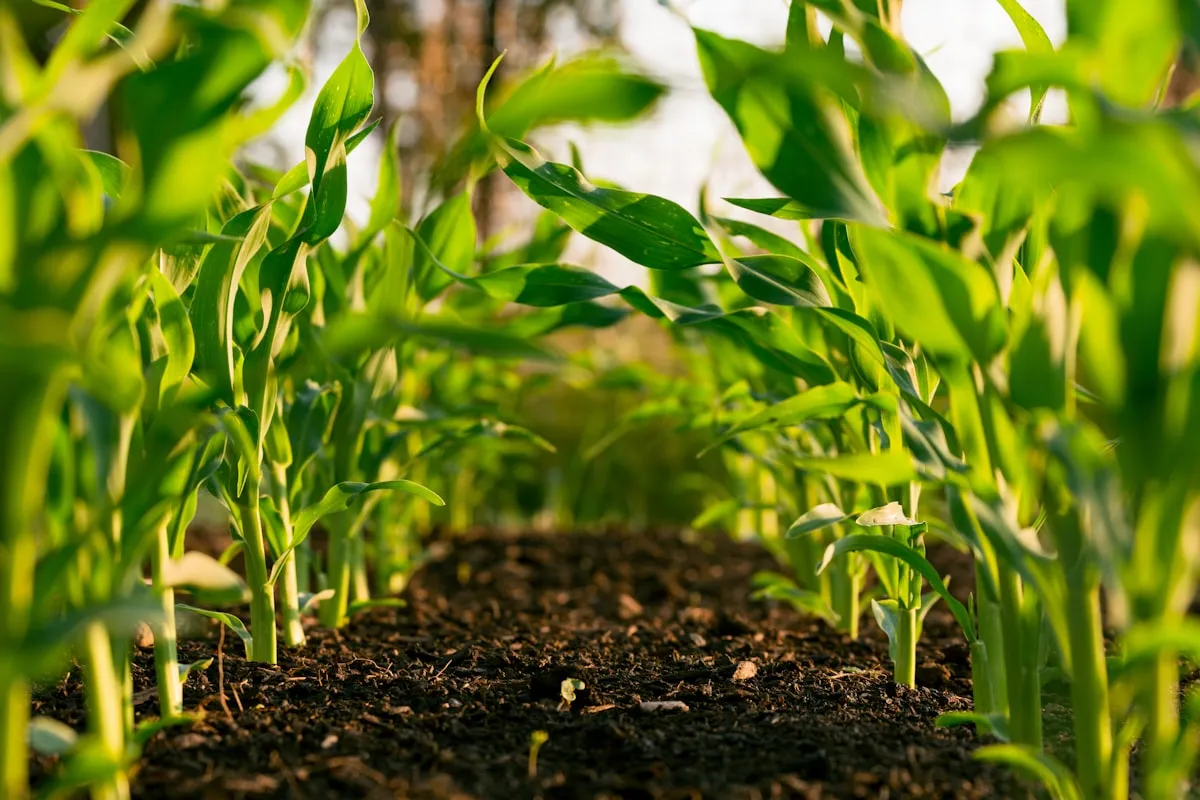
I'd spent a morning with Raj last August, walking land his grandparents first planted cotton on in 1952. He's in his sixties. His daughter is a software engineer in Bengaluru, and she'd talked him into trying a soil-moisture sensor network feeding a little AI assistant on his phone. He described himself to me, without prompting, as "sceptical but not a fool." Best one-line product brief I've ever heard.
Here is what that assistant does. It reads a scattering of moisture and temperature sensors, checks the weather forecast and his planting calendar, and once a day it sends him one sentence:
"Water field 3 this evening. Hold field 7 — rain likely Thursday."
That's the entire product. No dashboard. No "insights." No crop-health score. Raj reads it with his tea, agrees about three times out of four, and overrides it the rest — his instincts are fifty years deep and they get the final word. The sensors paid for themselves twice over in one season, almost entirely by stopping him watering fields that didn't need it.
The version that failed first
His daughter told me the first build was much cleverer. Charts. Predictions. The crop-health score. Raj used it for a week and stopped opening it.
"Too many numbers," he said. "I know my fields."
So the second version is a downgrade in technical ambition and an upgrade in actual use. The skill turned out to be in what they took out. That's an uncomfortable lesson for engineers, because the thing you're proudest of building is usually the thing the user wants you to delete.
A pattern I keep seeing on farms
Across agricultural clients, the same handful of truths keep surfacing:
- The farmer is the expert. The AI is a junior colleague with sharper eyesight and a longer memory. It advises; it does not decide.
- A dozen well-placed sensors and a dumb model beat an ambitious satellite-imagery pipeline for most farms — and when something breaks at harvest, you can actually fix it.
- Offline-first isn't a nice-to-have. Rural connectivity drops constantly, and a tool that dies when the 4G dies gets uninstalled by lunchtime.
- One useful alert a day earns trust. Seventeen earns resentment.
It's already working, just undramatically
A dairy co-op in the Netherlands runs a vision model that spots the first signs of lameness in cows days before a human can — so the animal gets treated before it's in real pain. Smallholder coffee growers in Colombia photograph a leaf, get a leaf-rust diagnosis, and a real agronomist's WhatsApp number if they want a second opinion. A wine estate in France times its harvest with AI-assisted forecasts; the winemaker described the tool to me as "a very clever apprentice who doesn't drink."
None of these are futuristic. None replace the person. All of them earn their keep, which is more than I can say for most demos I sit through.
If you're building for people who work with their hands
Go and do the job. Not observe it — do it. Walk the rows. Help bring in a harvest. Stand in the milking parlour at five in the morning. You'll learn more before breakfast than a year of user interviews would teach you, and whatever you ship afterwards will be twice as useful and a great deal less smug.
Now, about that second sentence in Raj's text. I'm going back. The cotton can wait; lunch with his family cannot. That's the kind of AI-in-farming I actually want to be part of — the kind that ends with someone inviting you to dinner.