The most impressive robots in operation today are boring to look at. Surgical arms that let an eye surgeon work at a scale no human hand can hold steady. Warehouse pickers that, after sixty years of failing at it, can finally grasp an object they've never seen. Robots that milk cows on the cow's schedule, no human in the loop. None of these will trend anywhere. All of them are changing the work they touch. That gap — between what's impressive and what's photogenic — is most of what you need to understand about robotics right now.
What AI actually added
For decades a robot was programmed: every motion, grip and branch hand-coded. That works for a welding arm bolted to an assembly line doing the identical task ten thousand times, and nowhere else. Two AI advances broke that ceiling.
First, perception. A robot can now identify what it's looking at — objects it's never seen, whole scenes, even instructions phrased in plain language. Vision was the bottleneck for sixty years and it's largely gone.
Second, learning from demonstration. Instead of coding the task, you show it — by example, video, or instruction — and let it work out the motion. The first generation is promising. The next will reset what's possible.
Put perception and demonstration together and you get robots that cope with environments they weren't explicitly programmed for. That's the whole game, and it's why this wave is different from the last three.
Where robots are winning right now
Warehouses, first and foremost. Amazon, Ocado and others run robotic fulfilment at serious scale. The best systems aren't fully autonomous — robots handle the structured work, moving pallets and sorting bins, and humans handle the irregular item on the messy shelf. That hybrid isn't a transition state. It's the answer for the foreseeable future, and pretending otherwise is how integration projects blow their budgets.
Surgery has gone from curiosity to standard option for a long list of procedures. The surgeon's still in the chair; the robot supplies precision, tremor filtering, and smaller incisions. Well established, not experimental.
Agriculture is moving fast: vision-guided weeders that tell crop from weed and pull the weed mechanically, no herbicide; mainstream robotic milkers across European dairy; early commercial harvesters for delicate crops. And indoor logistics — hospitals, hotels, restaurants — is quietly spreading. Note: indoor. The pavement delivery robots are mostly theatre.
Then the dangerous-environment work — robots climbing turbines, swimming pipelines, crawling through nuclear facilities. These exist to keep people out of places that kill people. Hard to argue with.
Where it's still a decade out, regardless of the pitch
General-purpose household robots. We are nowhere near a machine that folds laundry, cooks, and cleans a bathroom with the reliability of a sulky teenager doing the same. Dexterity plus common sense plus unstructured mess remains brutally hard.
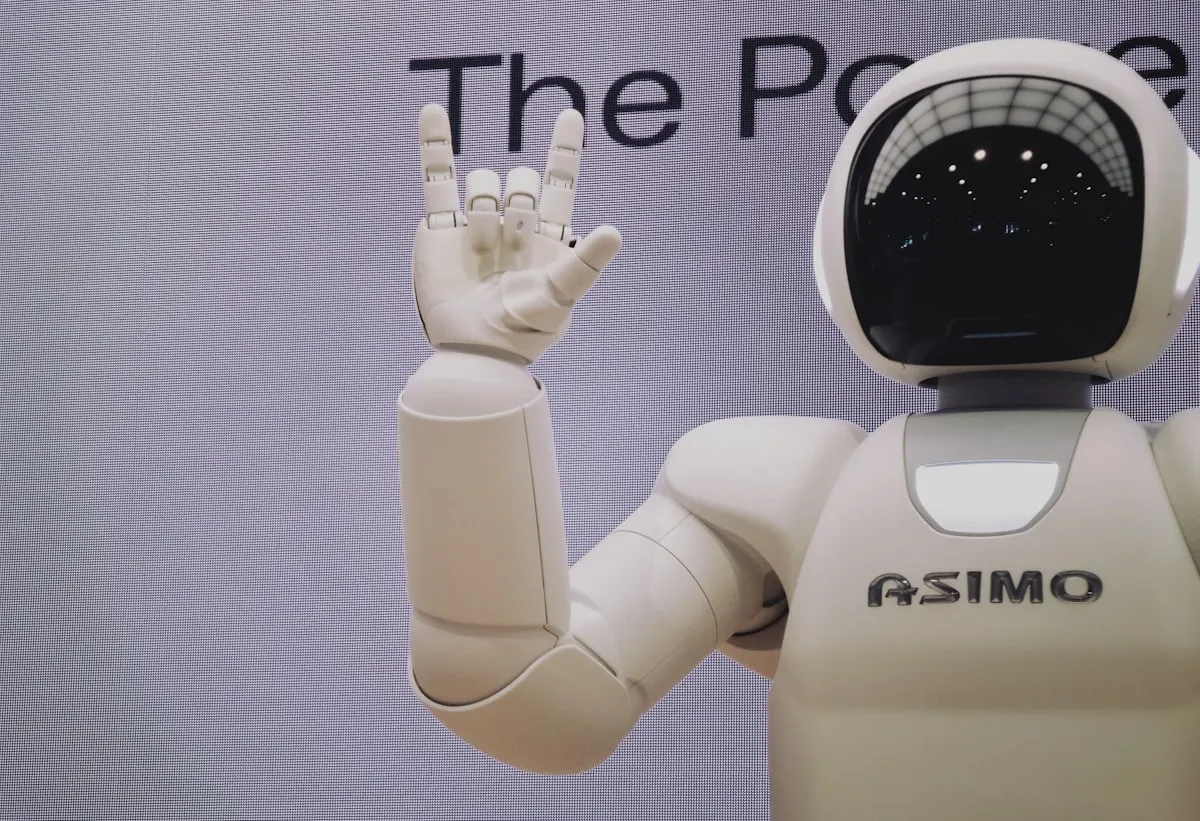
Humanoid robots in production. A great deal of capital is pouring into humanoid startups. Some of it will return. Most of it won't, or will return in markets the founders didn't predict. The humanoid form is usually the wrong form — a robot shaped like a person is generally far less capable at a given job than a purpose-built machine designed for that job. Form-factor fashion is not an engineering argument, and I've watched too many investors confuse the two.
Caregiving robots. Promoted for decades, especially in Japan, and still not deployed at scale, because care work is socially and physically harder than almost anything else robots are asked to do. Technology can support human carers. It cannot replace them, and we shouldn't be building toward that.
On "robots taking jobs"
The framing is wrong and it's been wrong the whole time. Robots don't take jobs. People who buy robots make decisions that reshape jobs. Every serious study of robotic deployment in manufacturing shows the work changes — fewer repetitive-strain tasks, more supervision, maintenance, and skilled work around the automation. Whether the total picture improves depends entirely on the surrounding policy, training and investment. Handle automation well and a society gets richer. Handle it badly and it doesn't. The machine has no opinion either way. It's a human choice, and dressing it up as technological destiny lets the humans off the hook.
If you're considering robots, four rules
Start with the task, not the robot — find the specific job that's expensive, dangerous, or impossible to staff, and work back from there. Assume hybrid: a robot-plus-human workflow is mature and productive; a fully autonomous end-to-end system is rare and expensive. Budget for total cost of ownership, because integration, maintenance and training dwarf the sticker price every single time. And pilot in a corner — one task, one shift, measured against a hard baseline — then expand only from what demonstrably works.
The robots that have already changed lives didn't replace the people. They moved the people onto work that's more skilled and more valuable. That's the version worth building. The version on the magazine cover, less so.