

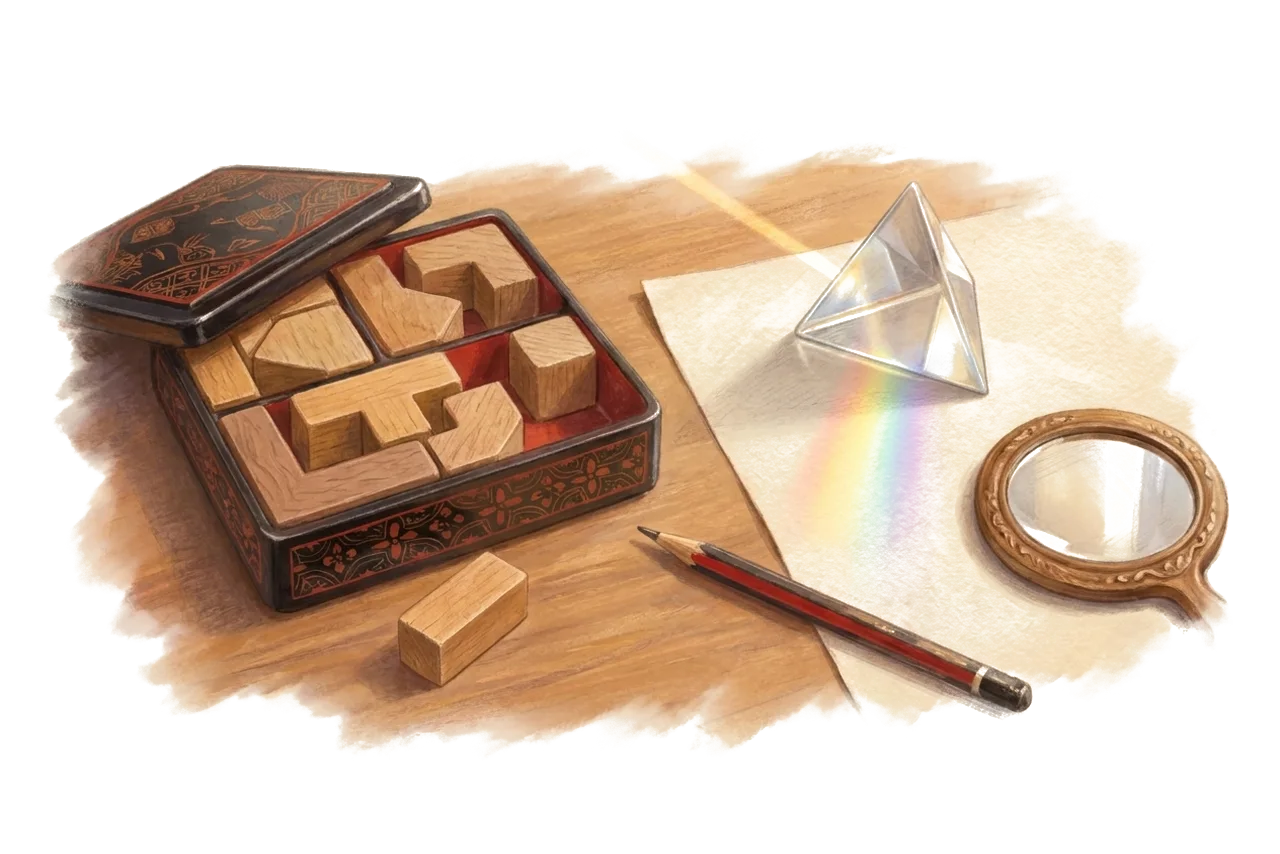
Some games start with a mechanic or a gap in a shop. These two started much earlier, with things I could never quite leave alone.
Bento: closing the box
At university, fitting things into a box was one of the first problems that showed me how hard a simple question can be. You have some shapes and a box. Can they all go in, with nothing left over?
It sounds like something you would do with a suitcase. Computer scientists call it a packing problem, and it is NP-hard: as the pieces add up, no known method can find the answer quickly every time. Fitting shaped pieces into a box exactly is one of the puzzles that has been proved to be that hard.
It stayed with me. Over the years I kept coming back to smaller versions of it: a knapsack problem here, a box-packing routine there, each one a corner of the same question.
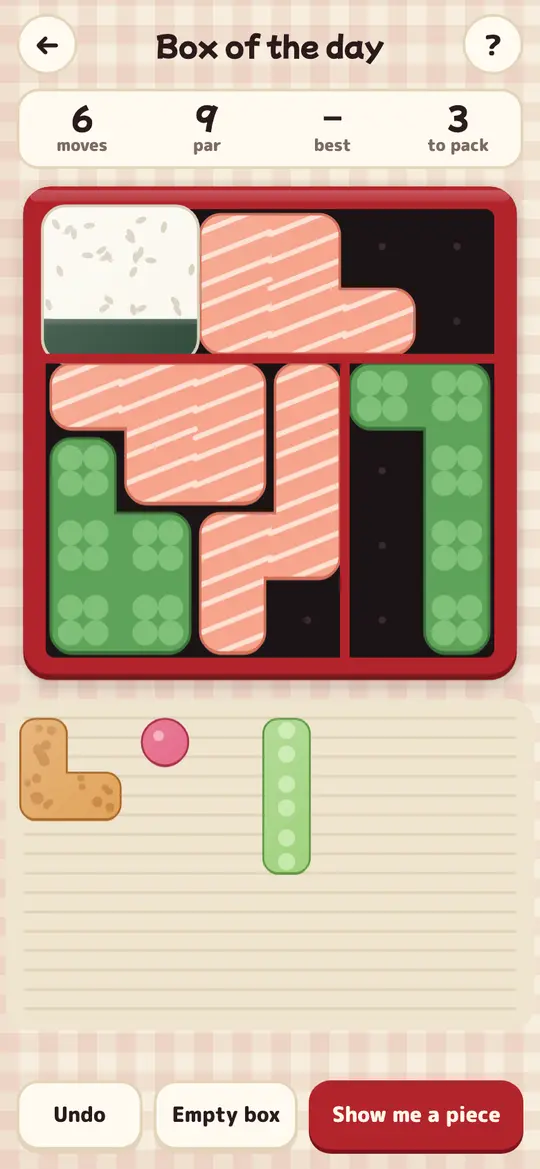
Bento is the first time I have built the whole thing as something you can hold. You drag rice, salmon, tamago and the rest into a lacquer lunchbox, tap a piece to turn it, and fill every compartment with nothing left over. The hard problem is still there underneath. It has just become forty-five boxes, and one more each day, every one of them checked so that it can be packed.
Making it felt like finishing something. Not solving the problem, because nobody has done that, but answering it the way I always wanted to: with a puzzle a person can enjoy, rather than an algorithm a machine has to grind through.
Lamplighter: following the beam
As a child, I was fascinated by mirrors and prisms. I spent many afternoons catching the light, making rainbow patterns, moving things a little to see what changed, and trying to understand what the light was actually doing.
The fascination grew up with me. Later it was interference patterns and the two-slit experiment: light behaving in ways that still feel slightly impossible, however many times they are explained.
Lamplighter is where that has finally gone. You turn mirrors to send a beam down a night street until every lamp is lit. Further along the road, prisms split the beam in two, and ruby and jade glass colour it, so a coloured lamp only lights in its own colour.
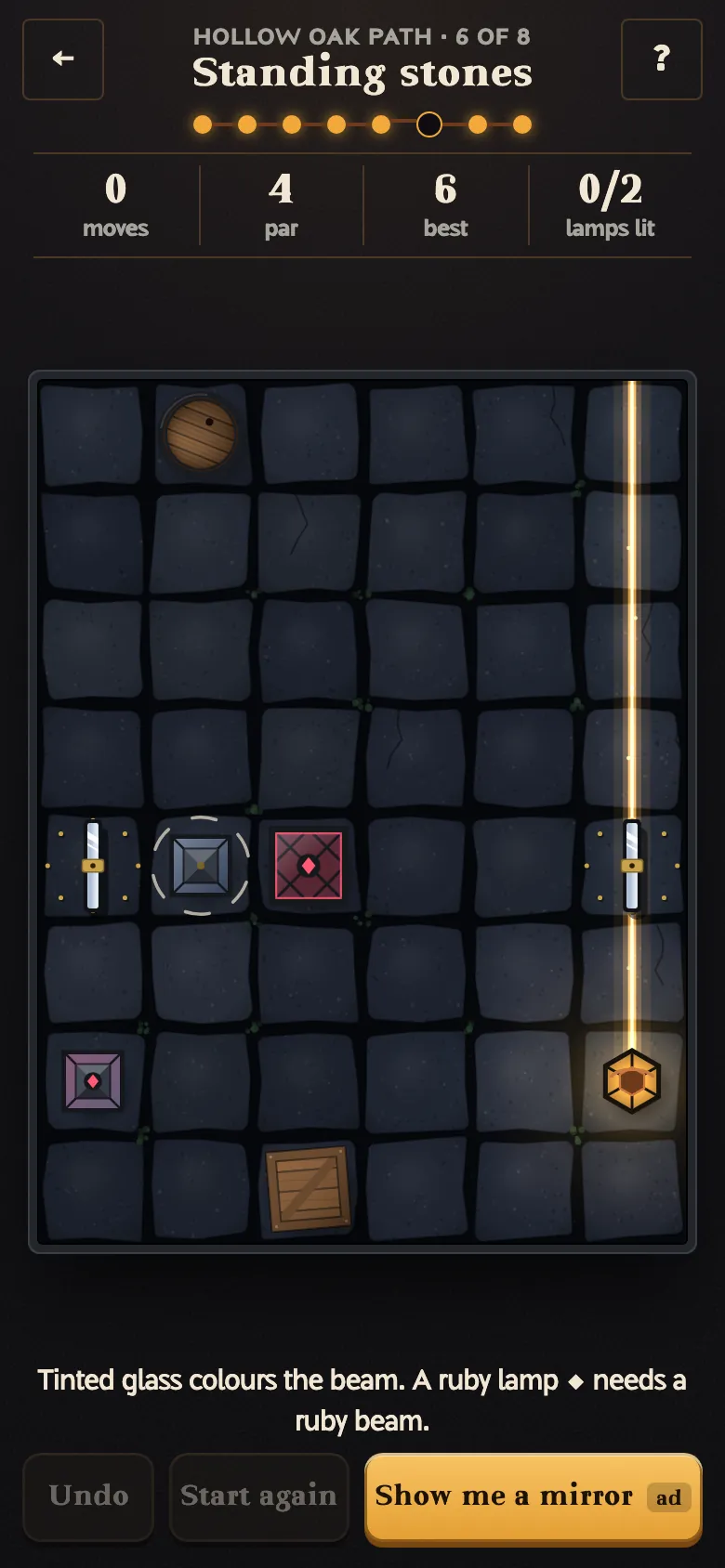
It is a small game, but it is made from those same afternoons: point the light, watch where it goes, change one thing and try again.
Why these two
A small studio could make almost anything small. It helps when the thing is something you have wanted to make for years. You notice which details matter, because you have been turning them over for a long time.
Bento is on Google Play and in your browser. Pack a box, or light a street.